
Lightweight Blocks vs Red Bricks: Which One’s Better for Projects
5 Nov 2025 • setahun yang lalu
Lightweight Blocks vs Red Bricks: Which One’s Better for Projects
Lightweight Concrete Blocks vs Traditional Red Bricks: Which Is Better for Construction Projects?
In the world of construction, choosing the right wall material is one of the most crucial decisions that affect project efficiency, cost, and overall quality. The two most commonly compared materials are lightweight concrete blocks and traditional red bricks.
Both have distinct characteristics, but with advancements in construction technology, lightweight concrete blocks are becoming increasingly popular — not only among large-scale contractors but also among local builders.
This article provides a detailed comparison between Lightweight Concrete Blocks and Traditional Red Bricks, focusing on strength, efficiency, and cost to help you make the best decision for your project.
1. Material and Production Process Differences
Traditional Red Bricks are made from clay that is burned at high temperatures. This process is still mostly manual, resulting in variations in size and strength.
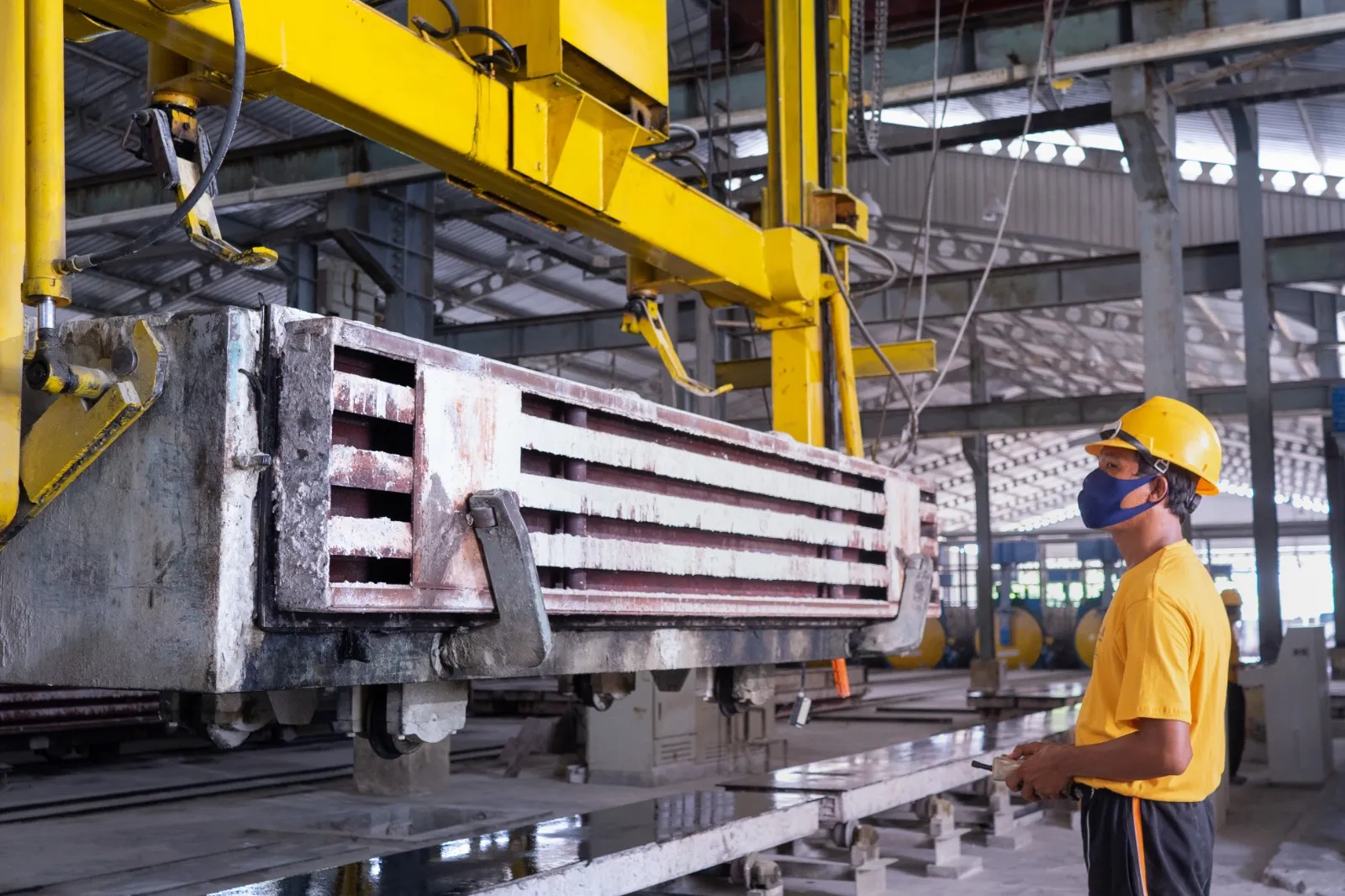
Meanwhile, Lightweight Concrete Blocks (AAC – Autoclaved Aerated Concrete) are a modern innovation made from a mixture of silica sand, cement, lime, water, and an expanding agent. The production process uses high-pressure autoclave technology, creating blocks that are light, precise, and strong.
2. Technical Advantages Comparison
| Aspect | Traditional Red Bricks | Lightweight Concrete Blocks |
|---|---|---|
| Weight | Heavy, adds structural load | Lightweight, easier to install |
| Dimensional Accuracy | Inconsistent | Highly precise |
| Thermal & Sound Insulation | Poor | Excellent — cooler and quieter rooms |
| Installation Speed | Slow | Up to 2× faster |
| Mortar Usage | Requires more mortar | Saves up to 30% mortar |
| Water Absorption | High | Low, keeps walls dry |
| Eco-Friendliness | Uses clay soil | More environmentally friendly |
From the comparison above, it’s clear that lightweight blocks excel in efficiency and finishing accuracy, making them highly suitable for modern construction projects.
3. Cost and Time Efficiency
While the unit price of lightweight concrete blocks is slightly higher than that of red bricks, the overall project cost tells a different story.
Because installation is faster and mortar usage is lower, labor and finishing costs can be reduced by 20–30%.
That’s why many contractors have switched to lightweight concrete blocks for housing, multi-story buildings, and commercial facilities.
4. Durability and Structural Quality
Lightweight blocks have fine pores that make them strong under compression yet resistant to cracking. Their fire-resistant and moisture-proof properties also make them ideal for tropical climates like Indonesia’s, where heavy rain and humidity are common.
Traditional red bricks, while strong, often develop fine cracks due to temperature and humidity changes. Aesthetically, red bricks are still favored for classic looks, but lightweight blocks outperform them in technical performance.
5. The Right Choice for Modern Construction Projects
If you’re looking for a trusted lightweight block supplier, make sure to choose one that guarantees high-quality standards and certified strength testing.
As part of KALLA, Kalla Beton is a reliable partner for Lightweight Concrete Block supply in Makassar, ensuring quality assurance, on-time delivery, and professional after-sales service.
Conclusion
When comparing Lightweight Concrete Blocks vs Traditional Red Bricks, it’s clear that lightweight blocks offer greater advantages in terms of:
Faster construction time
Dimensional precision
Long-term cost efficiency
Smooth and durable finishing quality
For projects that demand precision, efficiency, and a modern appearance, Lightweight Concrete Blocks from Kalla Beton are the smart choice.
Contact Us for the Best Offer!
Want your project completed faster and more cost-efficiently?
? Contact 0811 4414 030 | 0411 300 0103 (KALLA CARE) today to get a special offer for Lightweight Concrete Blocks in Makassar.
? Fast Delivery | ? Guaranteed Quality | ? Free Consultation
Related Product

Volume: 1 m³
Quantity: 111.1 blocks
Wall Coverage Area: 13.3 m²